
CNC cold roll forming machine with servo drive & custom roller dies. For galvanized, stainless, aluminum profiles – construction, solar, automotive. 3 efficiency upgrades. Factory direct.CE/ISO certification
Cold Roll Forming Machine: CNC Servo Roll Former with Custom Roller Dies for Construction, Solar & Automotive
Why “Cold Roll Forming” Is Still the Highest-Throughput Way to Make Metal Profiles
If your business needs continuous-length metal profiles — purlins, cladding sheets, solar racking rails, automotive trims, drawer slides, guide channels — there are really only three production routes:
- Press brake + welding — low throughput, high labor, inconsistent linearity
- Extrusion (aluminum) — great for complex hollows, but die cost high, limited to Al/Cu
- Cold roll forming — continuous, high speed, repeatable, works on galvanized steel, stainless steel, aluminum alloys
A CNC cold roll forming machine is the third route’s modern version: instead of mechanical chain drive + manual handwheel, you get servo-driven stations, CNC length control, and custom roller dies that swap for different profiles. That’s where the “3 Highly Efficient” upgrades come in — and where the production-per-shift number actually moves.
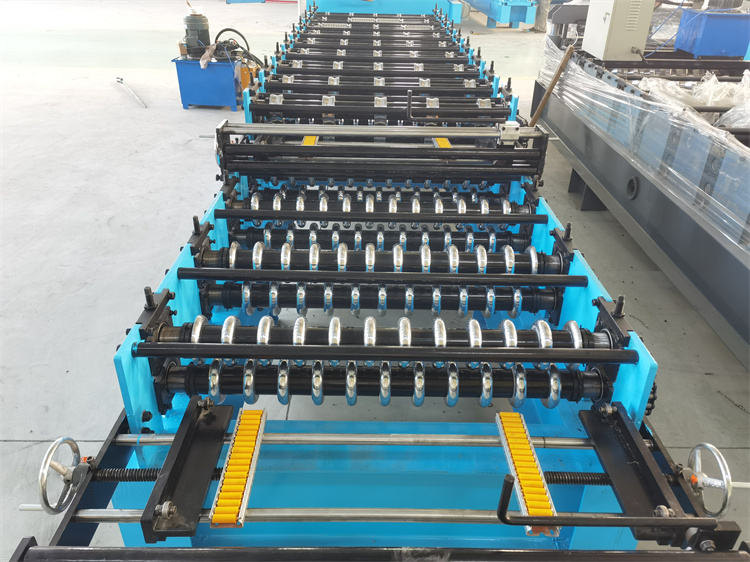
Highly Efficient Upgrades That Increase Production
The WADJAY CNC cold roll forming machine is positioned around three efficiency levers that directly affect parts-per-shift and changeover time — the two numbers that matter on a profile line.cold roll forming machine
✅ Efficiency #1: Servo Drive Control System → Stable High-Speed + Accurate Length
Older roll formers use mechanical variable-speed + chain/belt transfer between stations. They work, but two problems creep in after 12–18 months:
- Chain stretch → station-to-station sync drifts → profile twist
- Speed steps are fixed → can’t optimize for thin-gauge (fast) vs thick-gauge (slow)
The CNC servo version replaces that with:
- Servo-driven main line — synchronized across stations, no chain stretch drift
- Variable line speed — optimize per profile: thin aluminum racking = fast; thick stainless = slow but stable
- Encoder + PLC length control — cut-to-length accuracy consistent batch-to-batch, not “measure-and-guess”
Production impact: higher stable line speed + fewer scrap pieces from length drift = more good meters per shift.
✅ Efficiency #2: Customizable Roller Dies → One Machine, Multiple Profiles
A roll former is only as capable as its roller cassette / die set. The “customizable” part is what lets one base machine serve a product family:
- Roller material: high-grade alloy tool steel, CNC-machined, heat-treated, chrome-plated (surface protection for pre-painted / GI coils)
- Cassette design: quick-swap roller sets — change from purlin → cladding → channel in hours, not days
- Profile design support: send your cross-section drawing (material + thickness + tolerances), we design roller flower (pass sequence) + FEA check for springback

Production impact: instead of “one machine = one profile = one customer segment,” you run purlin for construction + racking rail for solar + trim for automotive on the same base frame. Higher machine utilization = faster ROI.
✅ Efficiency #3: Multi-Material Compatibility → One Line Serves Three Industries
The machine is specced for galvanized steel, stainless steel, and aluminum alloys — the three materials that dominate profile demand:
| Material | Typical Profiles | Why Roll Forming Wins |
|---|---|---|
| Galvanized steel (GI / PPGI) | Purlin, cladding, roofing, shutter slats, racking | High-volume, pre-painted → no post-paint; chrome rolls protect coating |
| Stainless steel (304/316) | Hygiene channels, architectural trims, marine racking | No rust post-machining; roll forming keeps surface intact vs welded press-brake |
| Aluminum alloys | Solar racking rail, lightweight framing, automotive trim | Soft → needs roller flower tuned for springback; high-speed possible |
Production impact: one machine + three roller cassette families = you can bid construction + solar + automotive jobs without buying three dedicated lines.
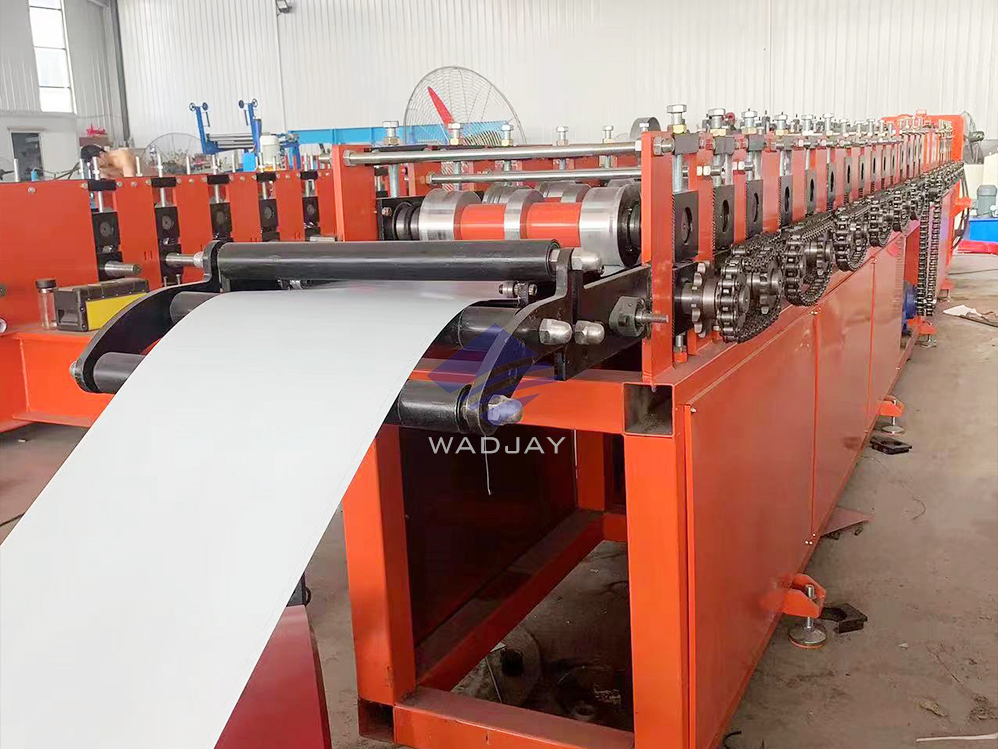
Typical Roller Flower Logic (What “Custom Roller Dies” Actually Means)
“Customizable roller dies” sounds like a sales phrase — here’s what it actually involves in engineering:
- Cross-section analysis — your profile drawing → material properties (yield, springback) → determine bend sequence
- Pass design (roller flower) — how much bend per station (gradual, not one-station crush) → avoids coil cracking / surface galling
- Roller CNC machining — each station’s top/bottom roller pair machined to its pass shape
- Chrome plating — post-machining, especially for GI/PPGI (protects coating, extends roller life 2–3×)
- Test run & adjust — first article off the line → measure springback → tweak last 1–2 stations if needed
Applicable Industries & Profile Examples
🏗️ Construction (Purlin, Cladding, Framing)
- C/Z purlin — galvanized steel 1.5–3.0mm typical
- Wall cladding / corrugated sheets — PPGI, color-matched
- Stud & track — drywall framing
- Floor deck — high-rise composite deck
☀️ Solar Energy (Racking Rails, Mounting Channels)
- Rail profiles — aluminum 6005/6063 or galvanized steel
- Mounting channels / L-feet / mid-clamps — roll-formed then cut-to-length + punch (offline or inline punch optional)
- Ground-mount rail — continuous 6m lengths, high-volume
🚗 Automotive & Transport
- Trim channels — stainless or aluminum edge trims
- Seat rail components (small profiles, high mix)
- Battery tray channels (EV trend — aluminum roll forming growing)
🏠 Appliance & Furniture (Overflow from Wire Bending Silo)
- Drawer slides (lighter-gauge steel)
- Shelf support channels
- Conveyor guide rails
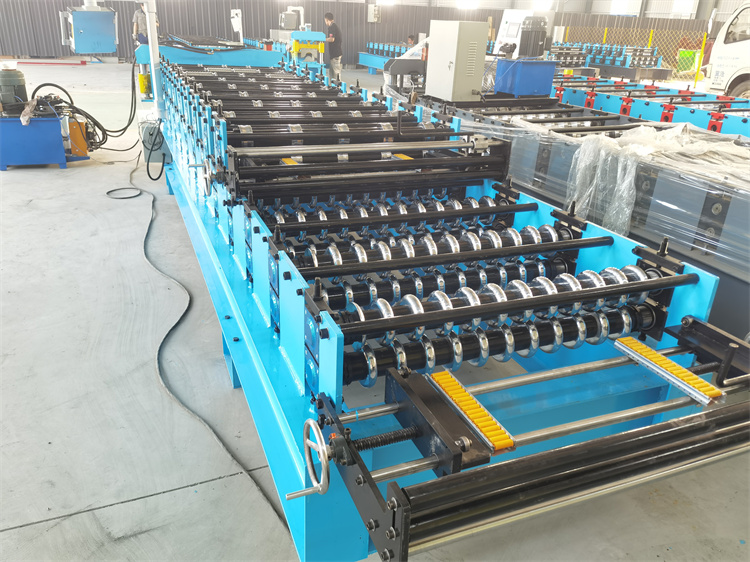
CNC Servo Cold Roll Former vs Traditional Mechanical Roll Former
| Factor | CNC Servo Cold Roll Former (this) | Traditional Mechanical Roll Former |
|---|---|---|
| Drive | Servo-synchronized stations | Chain/belt, mechanical vari-speed |
| Speed control | Stepless, per-profile optimized | Step-pulley or inverter-only |
| Length accuracy | Encoder + PLC, consistent | Cumulative drift |
| Changeover | Quick-swap cassettes | Roller re-shim, slower |
| Multi-material | GI / SS / Al — roller flower可调 | Often locked to one material |
| Best for | High-mix, construction+solar+auto, export markets | Single-profile, domestic high-volume |
Machine Configuration Options (How a Quote Comes Together)
Because “cold roll forming machine” is a configure-to-order product, a quote usually needs 4 inputs:
- Profile drawing (cross-section, material, thickness, tolerances) — this drives roller flower
- Coil spec — width, thickness range, yield strength (GI? SS? Al? 300MPa? 550MPa?)
- Line speed target — e.g. 10–20 m/min (heavy gauge) or 20–40 m/min (light gauge)
- Downstream — just cut-to-length? Or inline punch? Stacking?
Typical base machine includes:
- Decoiler (manual or hydraulic expandable, capacity matched to coil weight)
- Entry guide & straightening
- Roll forming stations (station count = function of profile complexity, typically 10–18 for medium profiles, 18–24+ for complex)
- PLC + servo drive + encoder
- Flying cut-off or stop-cut shear (hydraulic)
- Run-out table / stacker
Optional add-ons:
- Inline punching unit (hydraulic, for holes/slots before cut)
- Quick-change cassette system (for multi-profile shops)
- Auto stacker / bundler
- Remote monitoring (for 2–3 shift operations)
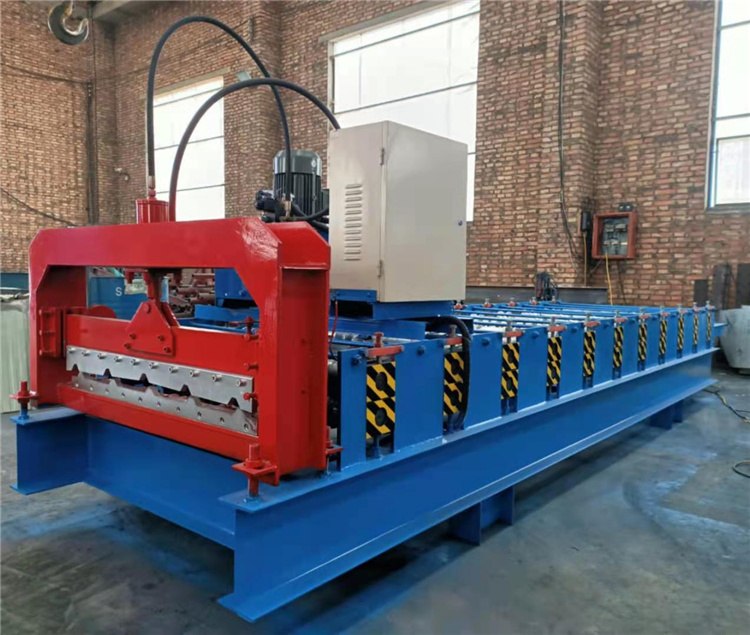
Production Flow – Plain English
- Coil loaded on decoiler → strip fed into entry guide
- Straightening → coil memory removed before first station
- Roll forming stations → gradual bend per pass, servo-synchronized across stations
- Encoder counts length → PLC triggers cut
- Flying cut-off / stop-cut shear → burr-controlled cut (tooling dependent)
- Run-out / stack → next coil cycle
One operator (plus loader driver). Continuous.
FAQ — Searcher Intent
Q: What’s the difference between “cold roll forming machine” and “roll forming machine”?
A: They’re the same category. “Cold” specifies that the metal is formed at room temperature (as opposed to hot rolling). In the profile industry, “roll forming machine”默认 = cold roll forming unless stated otherwise.
Q: Can one machine do galvanized AND stainless AND aluminum?
A: Yes — with the right roller flower + chrome-plated rolls + adjusted line speed. But you’ll typically swap roller cassettes between material families (different yield = different springback). Tell us your material mix, we design cassette strategy.
Q: How many profiles can one machine run?
A: Depends on station count and cassette design. A 14-station base with quick-change cassettes can reasonably cover 2–4 related profiles (e.g. C-purlin + U-channel + light cladding). If profiles are radically different (purlin vs corrugated roofing), you usually want separate roller sets, sometimes separate base machines.
Q: What line speed can I expect?
A: Wide range — 10–20 m/min for heavy-gauge steel (2–3mm+ purlin), 20–40 m/min for light-gauge (0.4–1.2mm roofing/cladding/solar rail). Actual speed limited by profile complexity + cut cycle, not just servo capability.
Q: Do you provide roller design?
A: Yes — send your profile cross-section drawing (DWG/DXF/PDF with dimensions), material, thickness, annual volume. We return roller flower proposal + station count + line layout + price.
Q: What about inline punching?
A: Optional hydraulic punching unit can be integrated before the cut station — for holes, slots, mounting holes in solar rail / purlin. Punch tooling is custom per hole pattern.
Q: What power and space?
A: 3-phase (380V/50Hz standard, customizable). Footprint varies heavily by station count + coil width — typical medium-profile line is ~15–25m total length (decoiler + former + cut + runout). We issue layout drawing pre-quote.