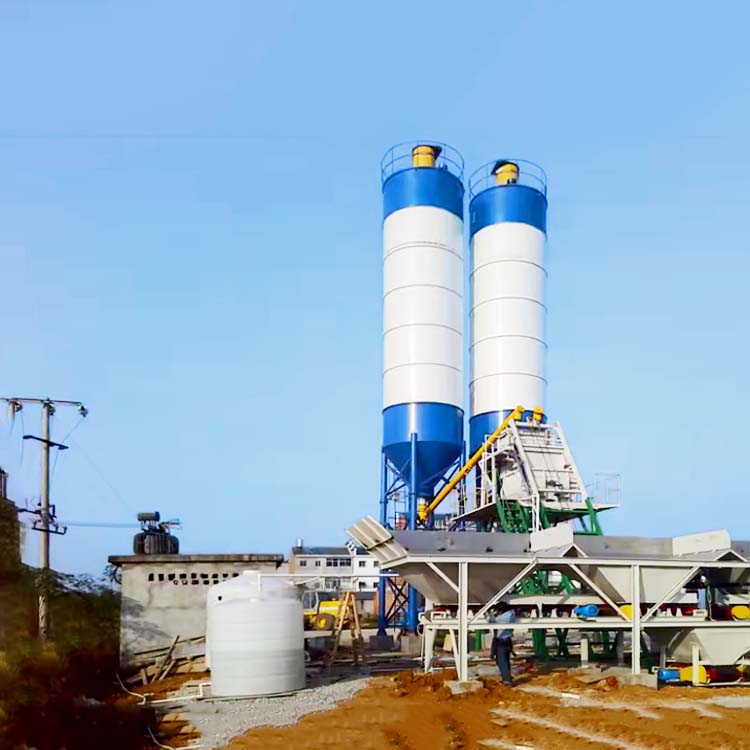
The Hidden Cost of “Just Order Ready-Mix”
If you’re a contractor, precast yard operator, or county-level builder in Africa, SEA, the Middle East, CE/ISO certification、or Latin America, you’ve had this conversation:
“Do we order ready-mix at $X/m³, or buy a small plant and make it ourselves?”
The math changes fast once you factor in three things that quote sheets never show:
- Haul distance — beyond 15–20 km, slump loss and retarder cost eat into you
- Per-m³ delivery premium — pump truck + transit mixer surcharge on small/remote pours
- Supply reliability — in rural road or mountain highway jobs, the nearest ready-mix batching plant might be 40–60 km away, and “they’ll deliver” becomes “they’ll deliver when they can”
A portable ready mix concrete plant flips the economics: bring the plant to the work front, control the slump, cut the delivery premium, keep the cube results.
The WADJAY HZS25 Portable Ready Mix Concrete Plant is built exactly for that crossover: 25 m³/h theoretical, JS500 compulsory twin-shaft mixer, PLD800 batcher, ±1%/±2% PLC weighing, 4,000 kg towable chassis, packed 305×230×268 cm. It’s the machine that turns “order ready-mix” into “make it here.”
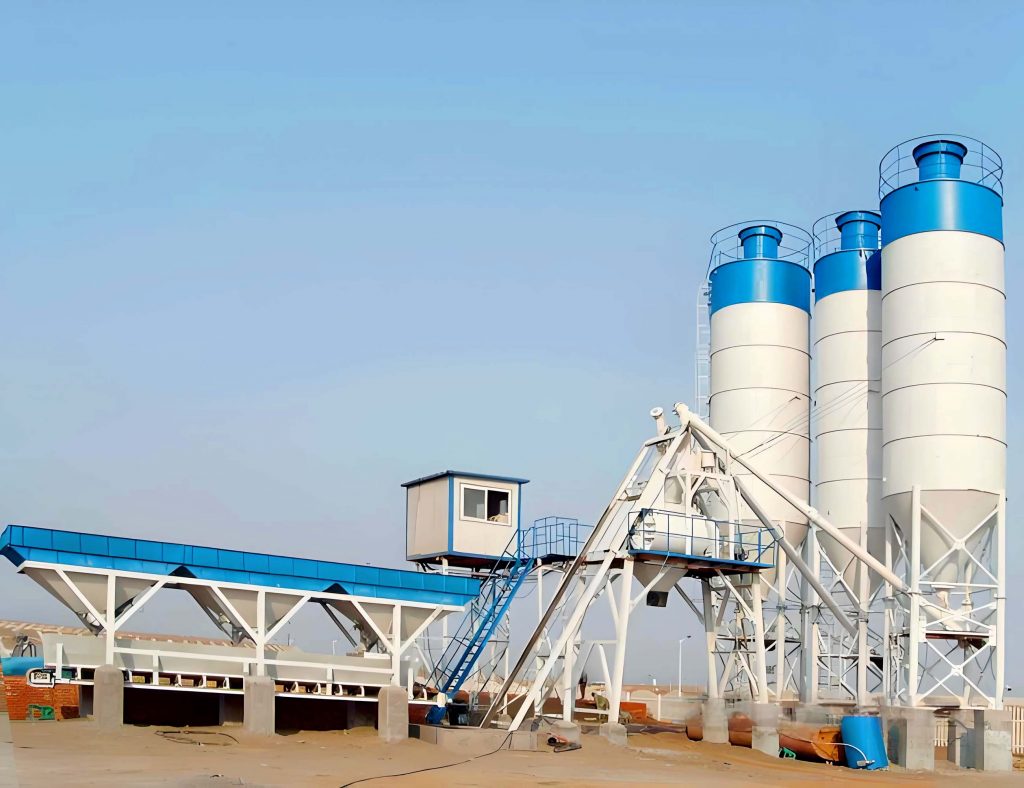
When Portable Ready-Mix Starts Beating Bought-In Ready-Mix
Let’s put numbers on the table (illustrative — your local cement, aggregate, and ready-mix rates will differ):
| Cost Factor | Bought-In Ready-Mix | Portable Ready-Mix (HZS25) |
|---|---|---|
| Concrete price | $X/m³ (includes plant + truck + margin) | Cement + agg + power + labor + depreciation |
| Delivery | Transit mixer surcharge per km | None (plant on-site) |
| Slump control | Supplier’s call, retarder after 20km | Yours — water/adm dosed ±1% |
| Minimum order | Truck-load minimums | Any volume — batch-by-batch |
| Lead time | Call ahead, queue | Pour when you’re ready |
| Break-even | N/A | Typically ~800–1,200 m³ total site demand |
📌 Rule of thumb: once your project or compound’s total demand crosses ~800–1,200 m³, a portable ready-mix plant like HZS25 usually undercuts bought-in ready-mix — because you stop paying per-m³ delivery premiums andyou control slump yourself. For a rural road segment + 2–3 culverts + a small bridge approach, that’s one season’s work.portable ready mix concrete plant
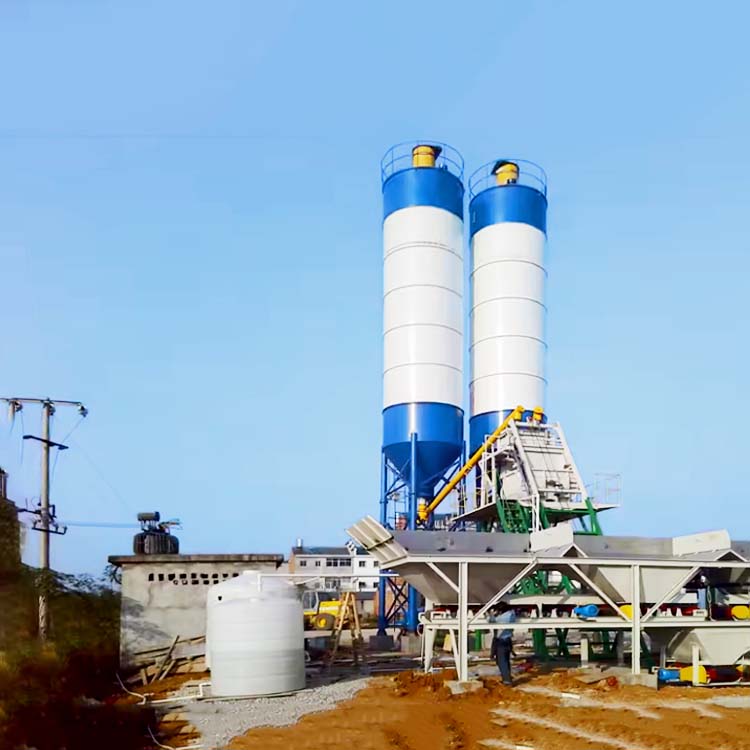
Why HZS25 Specifically — 4 Things That Make It a “Ready-Mix Replacer”
✅ 1. JS500 Twin-Shaft = Ready-Mix-Grade Homogeneity
Ready-mix trucks advertise “homogeneous mix” because the drum turns en route. The HZS25 doesn’t rely on transit — it mixes centrally before discharge:
- JS500 compulsory twin-shaft, 18.5 kW, 0.5 m³/batch
- Counter-rotating shafts, forced kneading → no dead zones, no cement balling
- Synchronized liquid weighing + pressurized injection — water & adm weighed beforeinjection, forced into mix core → eliminates cement balling at source
Result: concrete quality equal to or better than standard ready-mix, because you’re not fighting 40-minute transit + slump loss.
✅ 2. ±1% / ±2% PLC Weighing = W/C Ratio Protected
Ready-mix batching plants protect w/c ratio with load cells. The HZS25 does the same, in a portable frame:
| Loop | Accuracy |
|---|---|
| Cement/Fly Ash | ±1% (load-cell weigh hopper) |
| Water | ±1% (metered, not float-ball) |
| Admixtures | ±1% (liquid dosing tank) |
| Aggregates (PLD800) | ±2% (by weight, not volume) |
PLC stores multiple recipes (C15/20/25/30, local equivalents). Switch from subbase to structural deck in seconds on the touch screen. Batch #, weights, cycle time logged → QA documentation for infra clients.
✅ 3. 4T Towable Chassis = Plant Follows the Crew
A portable ready-mix plant that needs dismantling into crates to move 5 km isn’t portable. HZS25’s chassis:
- 4,000 kg (4 T) on heavy-duty wheel axle assembly
- Tows behind standard truck tractor (site-to-site)
- 1–3 days setup — leveling pads + anchor + power/silo/water (no reinforced concrete plinth like stationary HZS)
- No abandoned foundation when job ends
For rural road contracts with 3–5 scattered segments, one HZS25 follows the crew instead of building 3 small stationary plants. That’s where CAPEX-per-m³ drops hard.
✅ 4. PLD800 + Full-Cycle Auto = One Operator Runs It
Loader feeds PLD800 bins → sand/gravel/crushed stone auto-dosed by weight → cement screw → water/adm → JS500 → discharge → PLC prints batch ticket → next batch auto-starts.
One operator. One screen. Repeatable.
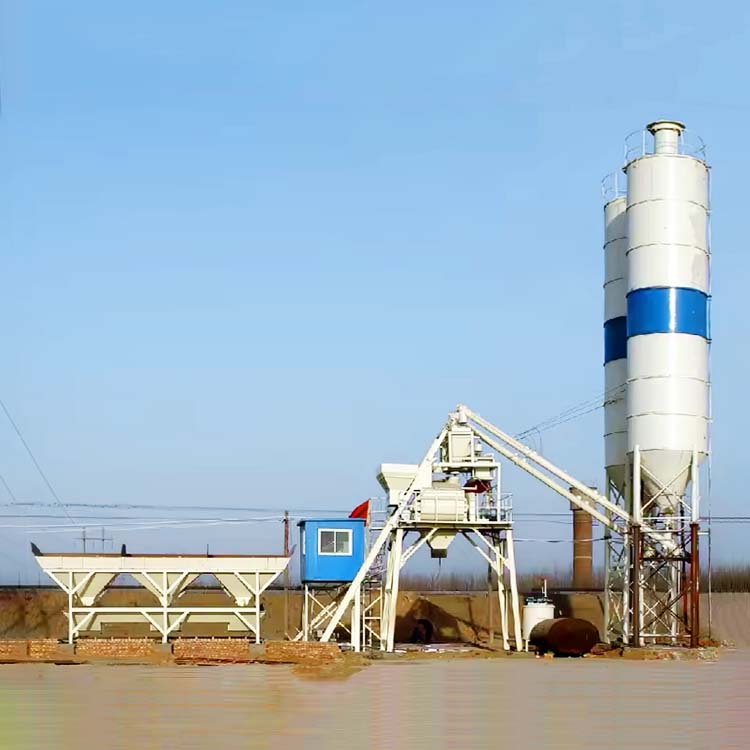
HZS25 Full Specifications (Portable Ready-Mix Config)
| Parameter | Unit | HZS25 Portable Ready-Mix |
|---|---|---|
| Model | — | HZS25 (WADJAY) |
| Theoretical Capacity | m³/h | 25 |
| Main Mixer | — | JS500 Twin-Shaft, 18.5 kW, 500L/batch |
| Aggregate Batcher | — | PLD800 (2-bin / 3-bin) |
| Weighing Accuracy | — | ±1% (cement/water/add), ±2% (agg) |
| Total Install Power | kW | 50.25 |
| Total Weight | kg | 4,000 (4 T) |
| Packed Size | cm | 305 × 230 × 268 |
| Discharge Height | m | 1.5 (custom 1.5–3.8) |
| Control | — | PLC auto, recipe mgmt, real-time print |
| Cement Silo | T | 50 / 100 / 200 (bolted/flaked) |
| Power Custom | — | 220/380/415/440V, 50/60Hz |
| Modes | — | Wet batching / Dry batching |
HZS25 vs “Just Keep Buying Ready-Mix” — Decision Matrix
| Situation | Verdict |
|---|---|
| Total site demand < 600 m³ | Keep buying ready-mix, don’t bother with plant |
| Total site demand 800–1,200 m³ | HZS25 starts winning on pure concrete cost |
| Total site demand > 1,500 m³ OR multi-site in one season | HZS25 wins clearly; add second silo or second plant |
| Nearest ready-mix plant > 25 km | Haul + slump loss push you toward portable |
| Pours need strict slump control (bridge deck, culvert, precast) | Portable wins — you control w/c |
| Remote mountain / island / no ready-mix nearby | Portable is the only answer |
Typical Deployment Scenarios
🛣️ Rural & Urban Road (Subbase + Pavement)
- Ready-mix often 30–50 km away; slump loss forces retarder → cost up, cube risk up
- HZS25 batches on shoulder, JS500 holds homogeneity, PLD800 doses local agg
- 25 m³/h × 8h ≈ 160–190 m³/day → covers a road segment per pour day
🌉 Bridge Approach / Culvert / Abutment
- Structural pours → w/c ratio protected by ±1% cement loop
- Mobile chassis follows approach → abutment → pier sequence
- Can switch recipe (subbase → C25/C30 deck) in seconds on PLC
⛰️ Remote Mountain Highway
- No nearby ready-mix; hauling wet concrete 40km = slump death
- Plant goes to the rock source, not vice versa
- Towable chassis = move camp every 3–5 km of road alignment
🏗️ On-Site Precast Yard (Drainage Pipe / Kerb / Hollow-Core / Foundation Block)
- Batch + cast in one compound
- PLC recipe store = different mix per product line
- 4T chassis means you can relocate yard when development zone shifts
🏠 County / Municipal Compounds (School, Clinic, Housing Cluster)
- Compact footprint fits inside compound
- Neighbors hear a plant, not a quarry
- Cut ready-mix delivery premium on small daily pours
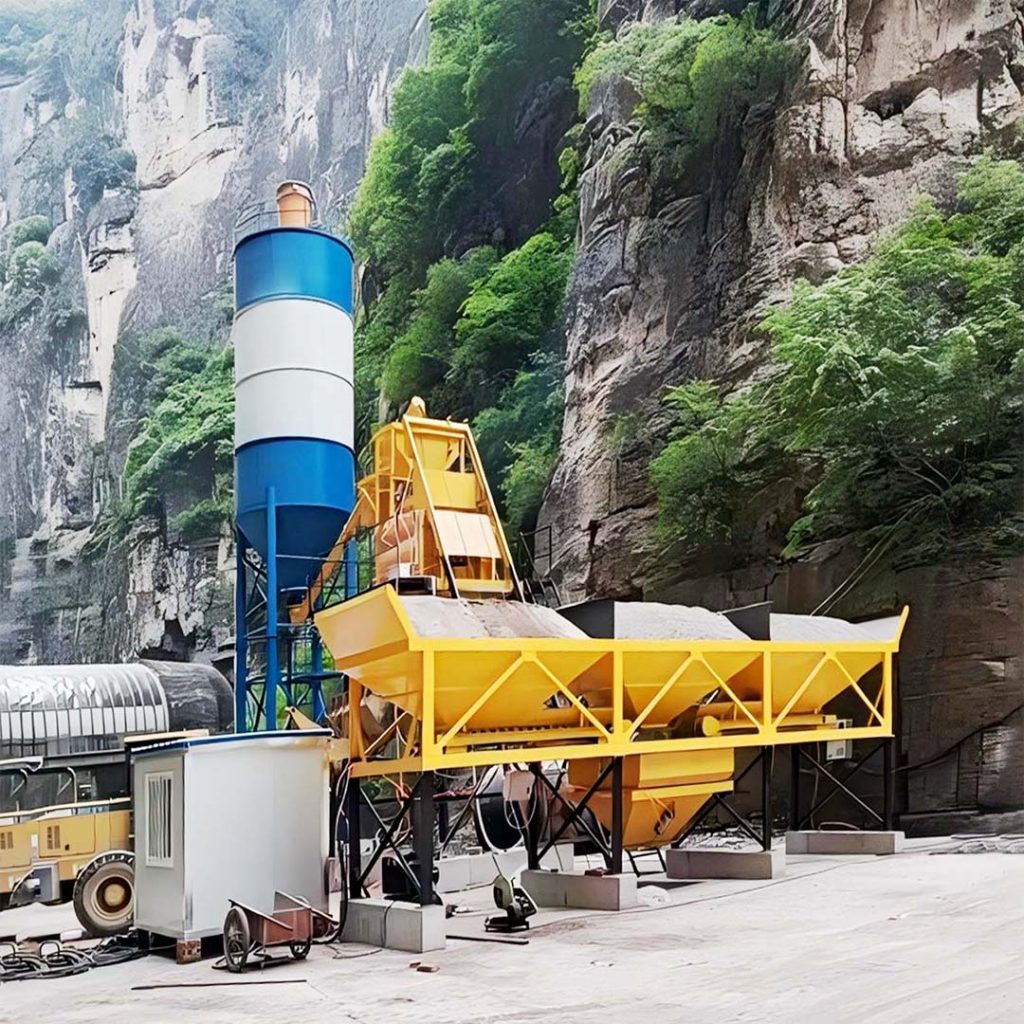
Wet Batching vs Dry Batching — Both Selectable
The HZS25 supports two operational modes (configurable per project):
- Wet Batching (default): All ingredients weighed + mixed in JS500 → homogeneous discharge. Best for structural pours, precast, anywhere cube strength matters.
- Dry Batching: Ingredients weighed, dumped into truck, truck finishes mixing en route. Useful for remote sites where truck transit helpsfinal mixing, or where you want faster truck turnaround.
One machine, two workflows — rare in the 25 m³/h class.
Cement Silo Options (Don’t Forget This in the Math)
Base HZS25 = mixer + batcher + PLC + chassis. Cement silo + screw conveyor quoted separately because:
- 50T bolted — small yard, frequent refill, container-friendly
- 100T bolted — standard for HZS25, 7–10 days autonomy at 25 m³/h
- 200T bolted/flaked — remote site, bulk cement delivery, fewer refill trips
Silo choice affects your landed cost + refill logistics — tell us your cement supply chain and we size it.
How the Batching Cycle Runs (Plain English)
- Loader → PLD800 bins (sand / gravel / crushed stone)
- PLD800 weighs agg → ±2% → transfers to mixer skirt
- Cement screw → weigh hopper → ±1% → drops into JS500
- Water + adm weighed & injected → pressurized, synchronized
- JS500 compulsory cycle (~60–72s) → homogeneous discharge
- PLC prints batch ticket → next batch auto-starts
- Discharge at set height → truck / pump / hopper
One operator. One recipe. Repeatable.
FAQ — Portable Ready-Mix Buyer Questions
Q: What’s the difference between “portable ready mix concrete plant” and “mobile concrete batching plant”?
A: They overlap. “Portable ready mix” emphasizes the use case — replacing bought-in ready-mix with on-site production. “Mobile batching plant” emphasizes the machine type — towable, chassis-mounted. The HZS25 is both.
Q: How much can I save vs buying ready-mix?
A: Depends on your local ready-mix price, cement/agg cost, and haul distance. Send us: (1) ready-mix price per m³ in your area, (2) cement + agg price, (3) total site demand → we run a simple break-even for you.
Q: Can it handle structural grades (C25/C30)?
A: Yes. PLC recipe system stores multiple designs. Final cube strength depends on your aggregate grading and cement consistency, but ±1% weigh loop protects w/c ratio — that’s the main lever.
Q: How many m³ per shift realistically?
A: ~160–190 m³ per 8-hour shift at 25 m³/h theoretical. Your actual depends more on loader speed, silo refill, and cleanup than on machine speed.
Q: Can it be towed on highways?
A: Chassis is site-transportable behind truck tractor. For over-the-road highway rules or container export, it ships packed (305×230×268cm, ~4T). Check local axle/towing regs before any public-road move.
Q: What container space?
A: Usually 1×20GP or 1×40HQ depending on silo choice (50T bolted ships efficiently). Container manifest issued pre-booking.
Q: What do you need to quote?
A: (1) Output? (25 / 35 / 50) — (2) Discharge height? — (3) Power? — (4) Silo size? — (5) Your ready-mix price + total demand (if you want break-even calc).