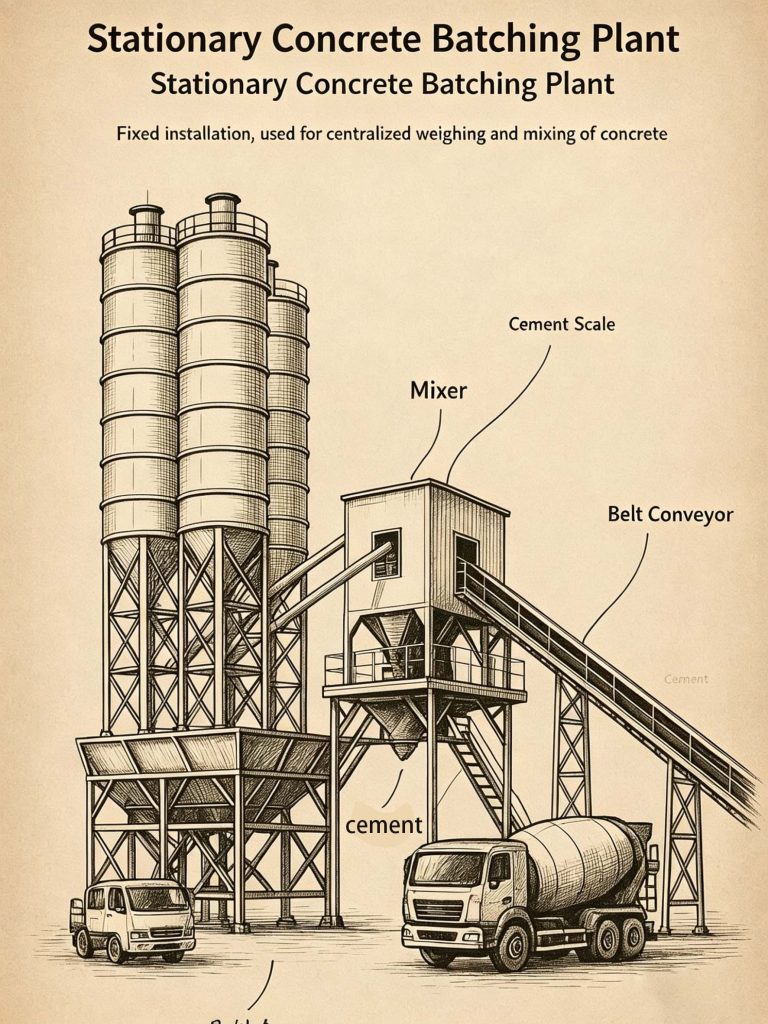
Professional concrete mixing station for centralized mixing and batching. High capacity, PLC controlled, suitable for large-scale construction. Factory direct price, CE certified. Get quote now.
Concrete Mixing Station: The Ultimate Solution for High-Volume Concrete Production
Why a Dedicated Concrete Mixing Station Outperforms Traditional Batching
In large-scale construction projects, the ability to produce consistent, high-quality concrete at a steady rate is critical to maintaining schedules and ensuring structural integrity. A Concrete Mixing Station—also known as a central mix plant or fixed batching plant—is specifically engineered for this purpose. Unlike simple batching plants that only weigh and discharge dry ingredients, a concrete mixing station incorporates a powerful mixer to produce fully mixed, homogenous concrete ready for immediate transport and placement.
This distinction matters because pre-mixed concrete delivered from a central mixing station offers superior uniformity, reduced segregation, and better workability compared to dry-batch or truck-mixed alternatives. For contractors and concrete producers serving demanding infrastructure, commercial, and industrial projects, investing in a high-quality concrete mixing station is a strategic decision that pays dividends in quality control, productivity, and customer satisfaction.Concrete Mixing Station
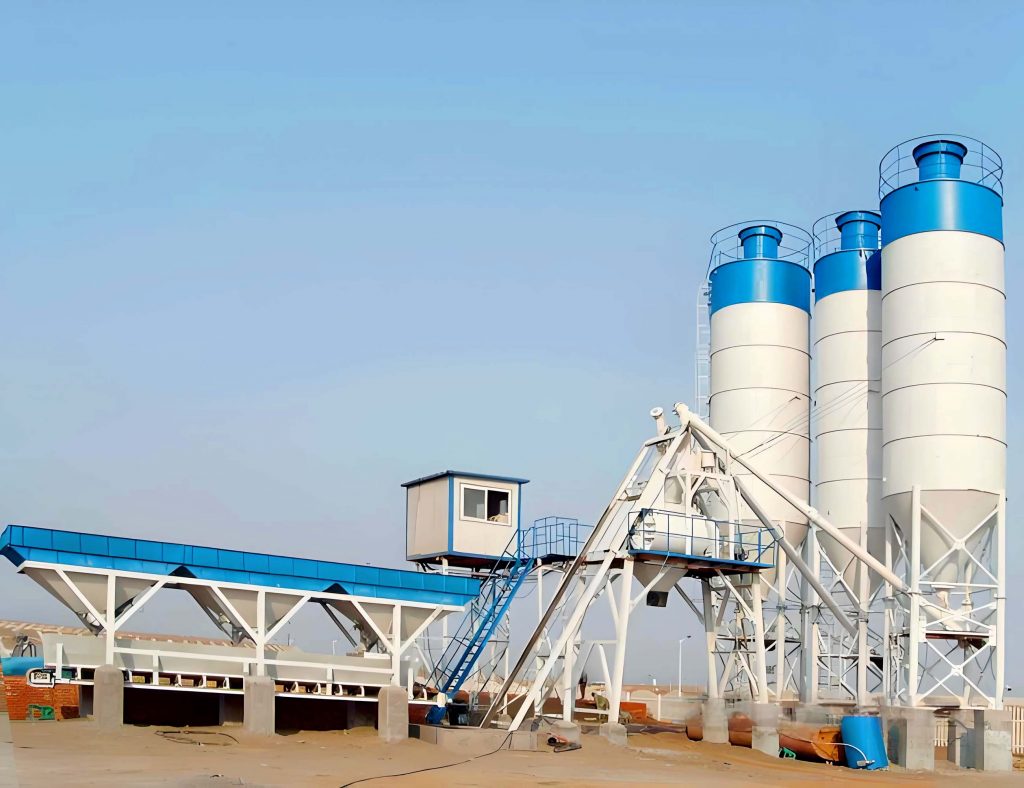
Technical Overview: How a Concrete Mixing Station Works
A typical concrete mixing station integrates several key subsystems into a seamless production line:
| Component | Function |
|---|---|
| Aggregate Bins | Store sand, gravel, and crushed stone in separate compartments |
| Weighing System | Precision load cells measure cement, water, aggregates, and additives |
| Belt Conveyor / Skip Hoist | Transport aggregates from bins to the mixing unit |
| Cement Silos | Store bulk cement with screw conveyor feeding |
| Mixer (Pan or Twin-Shaft) | Intensive mixing ensures uniform concrete consistency |
| Control System (PLC) | Automates batching sequence, recipe management, and data logging |
| Discharge Hopper | Delivers mixed concrete to truck mixer or conveyor |
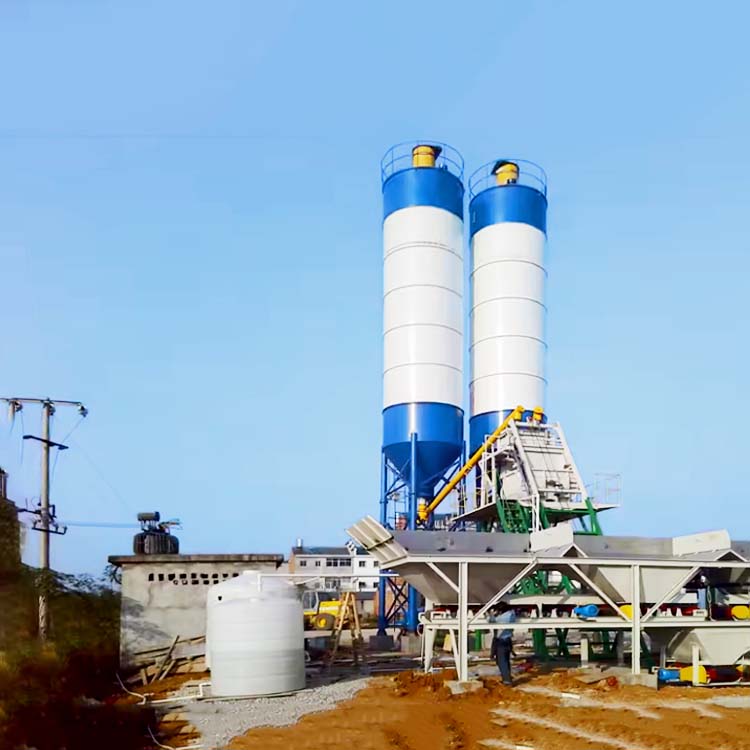
The process is fully automated: operators enter the required recipe (slump, strength grade, volume) via a touch-screen interface, and the PLC controls weighing, feeding, mixing, and discharging with minimal human intervention.
Key Advantages of Choosing a Concrete Mixing Station:Concrete Mixing Station
1. Superior Concrete Quality
Because all ingredients are weighed accurately and mixed intensively in a stationary mixer, the resulting concrete has consistent slump, uniform color, and optimal strength. This is especially important for projects requiring high-performance concrete (e.g., bridges, dams, high-rise buildings).
2. High Production Capacity
Concrete mixing stations are designed for continuous high-volume output—typically ranging from 60 m³/h to 240 m³/h or more. This makes them ideal for projects with tight deadlines and large concrete volumes.
3. Centralized Control & Automation
Modern PLC-based control systems allow:
- Recipe storage for multiple mix designs
- Real-time monitoring of production parameters
- Automatic adjustment for moisture content in aggregates
- Data logging for quality assurance and compliance
4. Lower Operating Costs
Compared to using multiple small batch plants or relying solely on ready-mix trucks, a dedicated mixing station reduces:
- Material waste through precise weighing
- Fuel and maintenance costs for truck mixers
- Labor requirements (one operator can manage the entire plant)
5. Flexibility in Mix Design
Whether you need standard-grade concrete, fiber-reinforced, colored, or high-slump mixes, a concrete mixing station can accommodate a wide range of formulations with quick changeover between recipes.
Applications & Industries
Concrete mixing stations are the backbone of large-scale construction and precast production:
- Road & Highway Construction – Continuous paving, bridge piers, culverts
- Commercial & Residential Developments – Foundations, slabs, columns, walls
- Precast Concrete Plants – Blocks, pipes, beams, panels
- Infrastructure Projects – Dams, tunnels, ports, airports
- Mining & Industrial – Heavy foundations, processing plant floors
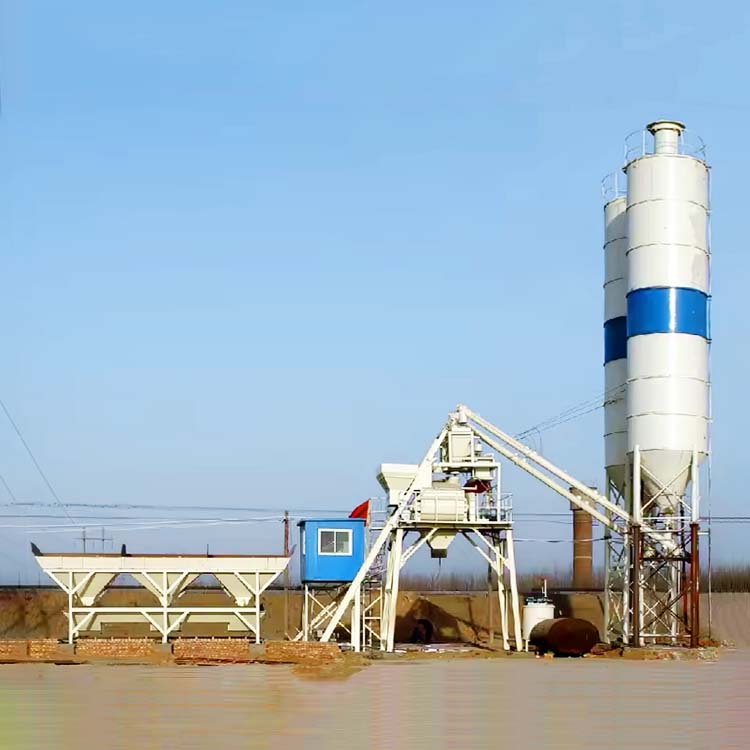
Comparison: Concrete Mixing Station vs. Dry Batch Plant
| Feature | Concrete Mixing Station | Dry Batch Plant |
|---|---|---|
| Mixing Location | Central mixer | In truck mixer (during transit) |
| Concrete Uniformity | Excellent (pre-mixed) | Moderate (relies on truck mixing) |
| Production Speed | High (continuous) | Moderate (batch-by-batch) |
| Quality Control | Tight (lab samples from mixer) | Variable (dependent on truck mixing) |
| Initial Investment | Higher | Lower |
| Best For | Large projects, consistent quality | Small/medium projects, lower capital |
Frequently Asked Questions (FAQ)
Q: What is the difference between a concrete mixing station and a concrete batching plant?
A: In common usage, a “batching plant” may refer to a dry-batch system where ingredients are weighed and discharged into a truck mixer. A “concrete mixing station” specifically includes a stationary mixer that produces fully mixed concrete before discharge. The latter offers better quality control and is preferred for large-scale or high-spec projects.
Q: What capacity concrete mixing station do I need?
A: Capacity depends on your project’s peak concrete demand. For example, a 90 m³/h plant can support a medium-sized commercial building project, while a 180 m³/h plant is suitable for highway or dam construction. We can help calculate based on your pour schedule.
Q: Can the mixing station produce different concrete grades?
A: Yes. Modern PLC systems store multiple recipes. Changing from C25 to C40, for instance, takes only a few seconds via the control panel.
Q: What is the lead time for delivery and installation?
A: Standard lead time is 45–60 days. Installation and commissioning typically take 2–4 weeks, depending on site preparation and local conditions.
Q: Do you provide after-sales support and spare parts?
A: Yes. We offer remote technical support, on-site training, and a comprehensive spare parts inventory to minimize downtime.