
Roller shutter door manufacturing machine for PPGI/GI slats 0.4–1.2mm. WJ-4.5/5.0/6.0 models, 6/7/8 roll stations, 6m/min, chrome-plated rolls. Factory direct, export to India/Middle East/Africa.CE/ISO certification
Roller Shutter Door Manufacturing Machine – Rolling Shutter Slat Roll Former WJ-4.5 / 5.0 / 6.0
Why Local Roller Shutter Production Is Replacing Imported Slats
If you’re searching a roller shutter door manufacturing machine, the real question isn’t “does the machine work” — it’s “why build slats locally instead of importing finished ones?”
Across India, Thailand, Russia, Algeria, Qatar, Morocco, Saudi Arabia, and Oman, three trends are converging:
- Urban retail growth – shopfront roller shutters are the default security closure from Delhi to Casablanca
- Warehousing & logistics boom – godowns, distribution centers, cold storage all specify industrial roller shutters
- Import substitution – pre-made slats land at 30–40% higher cost after freight + duty; local roll forming + assembly captures that margin
The Wadjay WJ-series roller shutter door manufacturing machineis built exactly for that: continuous cold roll forming of PPGI or GI strip into round-type shutter slats, widths 115 / 127 / 152mm, thickness 0.4–1.2mm, at 6 m/min (20 ft/min). One operator. One pass. Finished slat off the exit, ready for end-crimp / end-lock / assembly.
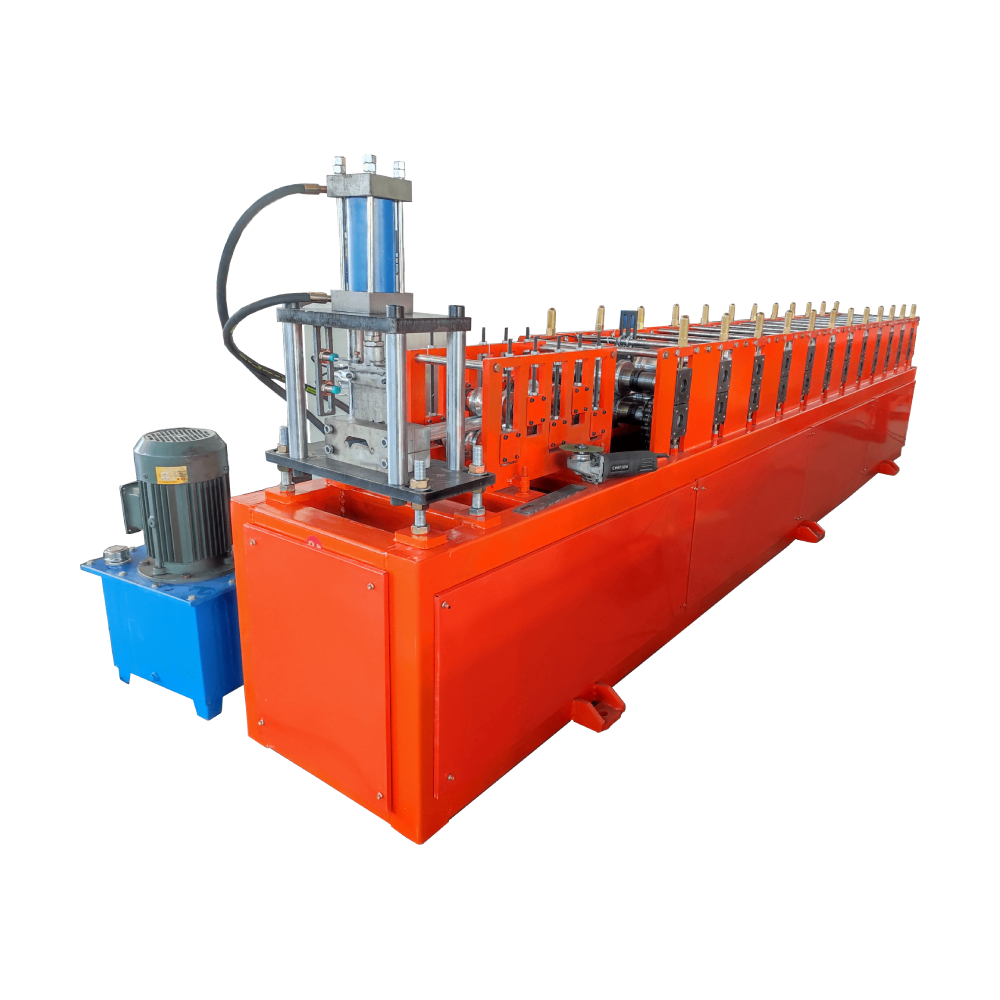
WJ-Series Full Specifications (All 6 SKUs)
| Model | Strip Width | Thickness (mm) | Formed Slat Ø (Round) | Roll Pairs | Speed (m/min) | Motor (HP) | Net/Gross (kg) | Dimensions (m) | Shipping Vol (m³) |
|---|---|---|---|---|---|---|---|---|---|
| WJ-4.5/LD | 115mm (4.5″) | 0.4–0.9 | 76mm (3″) | 6/7/8 | 6 | 5 | 950/1300 | 2.0×1.4×1.1 | 4.0 |
| WJ-4.5 | 115mm (4.5″) | 0.7–1.2 | 76mm (3″) | 6/7/8 | 6 | 5 | 950/1300 | 2.0×1.4×1.1 | 4.0 |
| WJ-5.0/LD | 127mm (5.0″) | 0.4–0.9 | 85mm (3.35″) | 6/7/8 | 6 | 5 | 1100/1450 | 2.2×1.5×1.2 | 5.0 |
| WJ-5.0 | 127mm (5.0″) | 0.7–1.2 | 85mm (3.35″) | 6/7/8 | 6 | 5 | 1100/1450 | 2.2×1.5×1.2 | 5.0 |
| WJ-6.0/LD | 152mm (6.0″) | 0.4–0.9 | 95mm (3.75″) | 6/7/8 | 6 | 7.5 | 1200/1600 | 2.5×1.6×1.4 | 6.0 |
| WJ-6.0 | 152mm (6.0″) | 0.7–1.2 | 95mm (3.75″) | 6/7/8 | 6 | 7.5 | 1200/1600 | 2.5×1.6×1.4 | 6.0 |
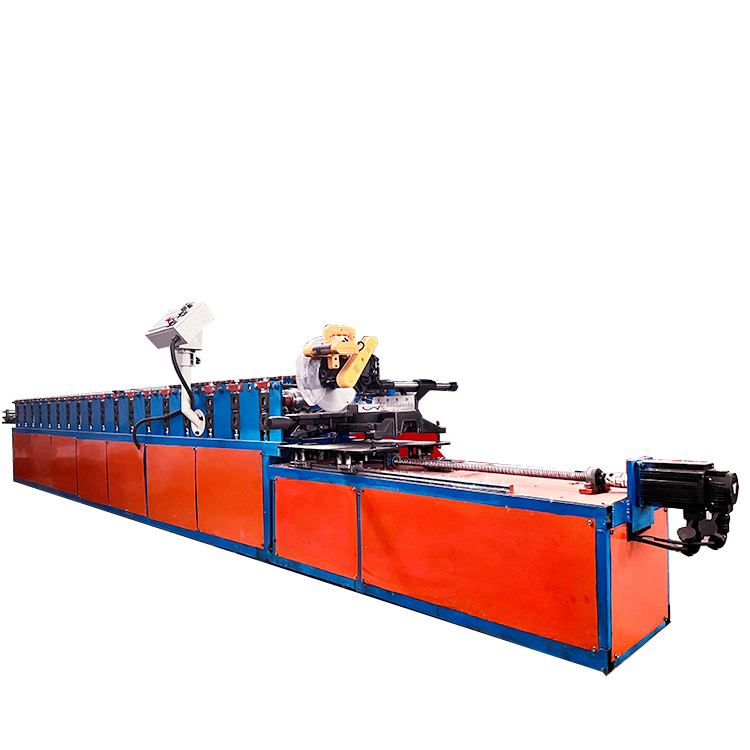
What stays constant across the range:roller shutter door manufacturing machine
- Max length: no limit (continuous run, cut-to-length by handheld or optional auto-cutter)
- Line speed: 6 m/min (20 ft/min) — stable for slat quality, not a race but consistent
- Roll stations: 6 / 7 / 8 pairs → see next section for why station count matters
6 / 7 / 8 Stations = How Many Profiles You Can Run
This is the quiet differentiator most suppliers don’t explain clearly:
| Roll Stations | Profiles per Machine | What That Means for You |
|---|---|---|
| 6 stations | 1 profile | Single slat type — highest speed, simplest setup, lowest cost. Good if your market standardised on one slat (common in smaller cities) |
| 7 stations | 2 profiles | Swap quick-change cassettes or upper/lower roll sets → e.g. a standard slat + a reinforced slat for industrial jobs |
| 8 stations | 3 profiles | Full flexible: e.g. 4.5″ std slat + 4.5″ reinforced + a window-profile variant. One machine covers a product family |
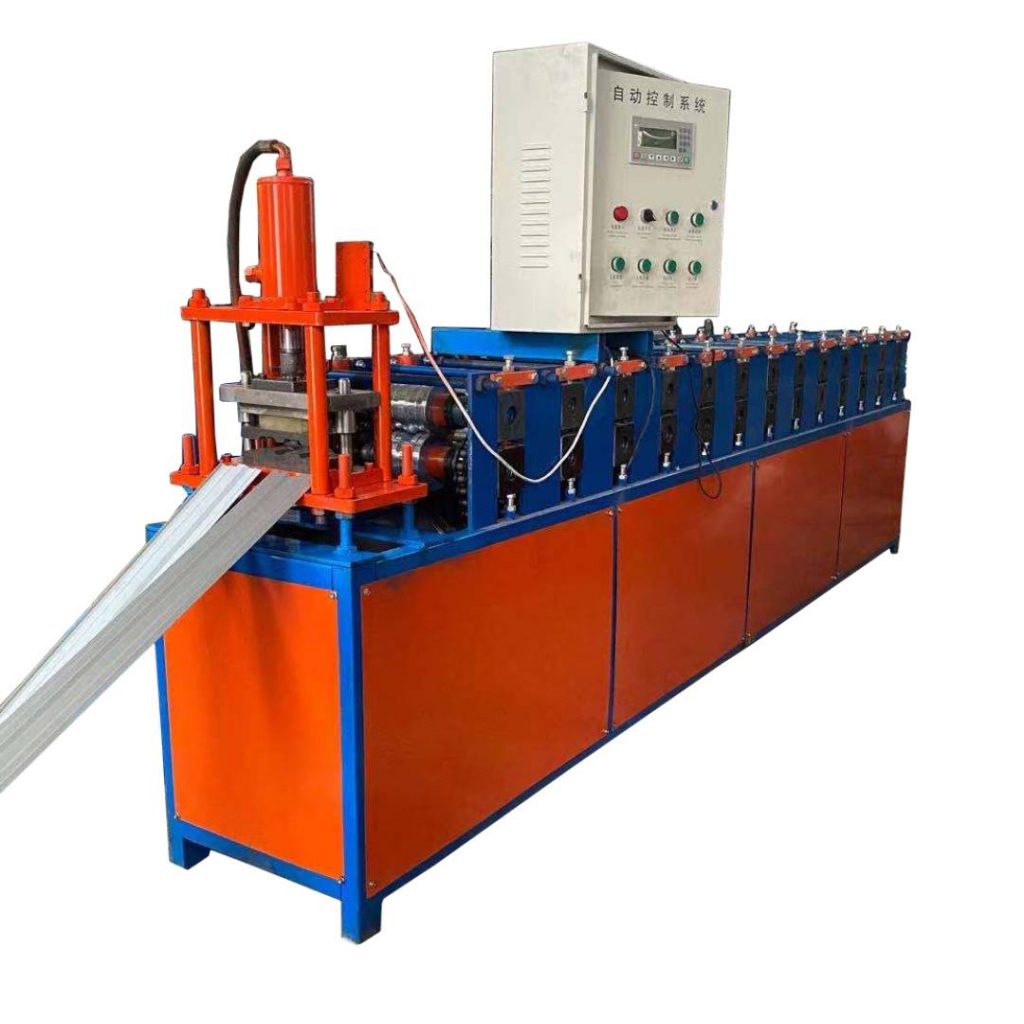
Machine Construction – What You’re Actually Paying For
The brochure says “steel construction.” Here’s what that means in practice on a roller shutter door manufacturing machine:
- Machine-cut gears drive the roll shaft train — not chain, not belt. Gears give steadier torque transfer at 6 m/min, especially when the strip hits the deep-forming passes on a 1.2mm HD slat.
- Chrome-plated roll surfaces — every roll face is chrome-plated after precision machining. Two reasons: (1) no scratch on color-coated PPGI surface, (2) roll life extends 2–3× vs bare steel in coastal/humid markets (think Mumbai, Chennai, Jeddah, Casablanca).
- Strip guides & supports between stations — keep the strip tracking straight so you don’t get twisted slats or edge waviness. This is where cheap machines cut corners.
- Coil loading compatible — standard uncoiler (manual or hydraulic expansible) feeds the entry; the machine itself accepts coil roll loaded at the infeed.
- Steel-framed base — 950–1200 kg net weight depending on model, no vibration at 6 m/min, no “walking” on the shop floor.
Raw Material & Output Profile
| Item | Typical Spec |
|---|---|
| Material | PPGI (pre-painted galvanized), GI (galvanized iron), occasionally aluminum on request |
| Thickness | 0.4–0.9mm (LD) / 0.7–1.2mm (HD) |
| Strip width | 115 / 127 / 152 mm |
| Formed slat type | Round-type (most common globally; custom die for flat/curved hybrid on request) |
| Slat Ø after forming | 76 / 85 / 95 mm |
| Surface | No scratch (chrome rolls + guided strip path) |
| End use | Slat → crimp ends → assemble into shutter curtain → install with guide rails, bottom bar, barrel assembly |
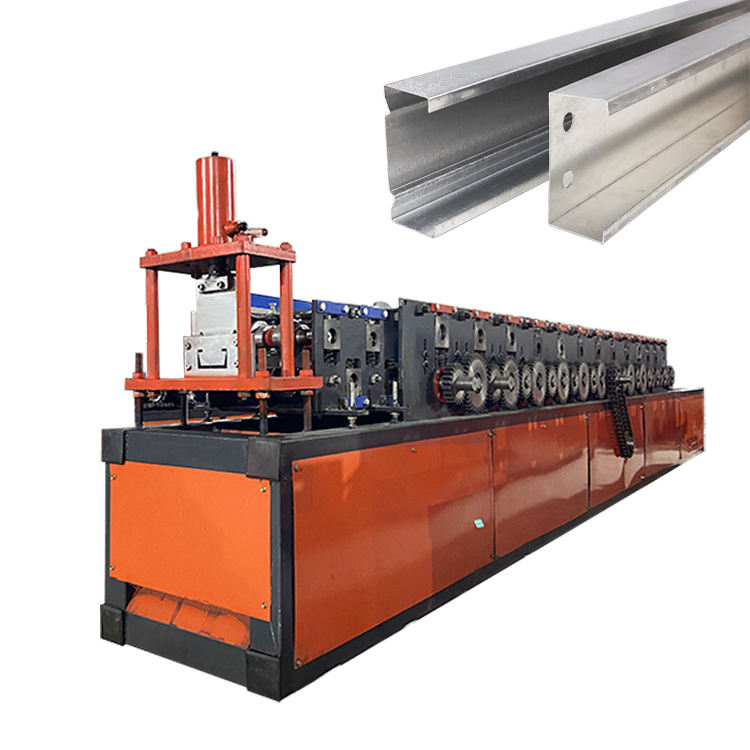
Applications – Where the Slats Actually Go
🏪 Commercial / Retail Shopfronts
- Standard 4.5″ (115mm) slats, LD 0.4–0.9mm PPGI
- Most common spec in India, Thailand, Morocco, Algeria urban retail
- Color-matched to storefront (PPGI = pre-painted, no post-paint needed)
🏭 Industrial Warehouses / Godowns
- 5.0″ or 6.0″ HD (0.7–1.2mm GI/PPGI)
- Higher wind-load zones (coastal Saudi/Qatar/Oman)
- Often paired with motorized barrel assembly not manual pull-up
🚗 Garages & Residential Complexes
- 4.5″ LD for gated community garages, small commercial parks
- Quieter operation (thinner slat, tighter end-lock fit)
❄️ Cold Storage & Logistics
- 6.0″ HD, sometimes foam-insert compatible slat profiles (custom roll)
- Continuous-run warehouses, distribution hubs
🏢 Institutional (Schools, Markets, Bus Stops)
- Mixed 4.5″ / 5.0″ depending on opening size
- Government tenders in Africa & Middle East often specify “local manufacture” now — this machine qualifies
Roller Shutter Machine vs “Buy Imported Slats” – The Cost Logic
Let’s put numbers on the table (illustrative, your local freight/duty will differ):
| Factor | Local Production (WJ machine) | Import Finished Slats |
|---|---|---|
| Material cost | Local PPGI coil (bulk buy) | Finished slat + ocean freight |
| Duty & port handling | Coil often lower duty than finished | Higher HS code duty |
| Flexibility | Cut any length, any color coil | Locked to importer’s stock |
| Lead time | Same-day dispatch | 4–8 week ocean |
| Break-even | Typically ~18–24 months for a busy shop | N/A |
| Best for | Shutter manufacturers, distributors, rolling + installation contractors | One-off projects, no volume |
How the Line Runs (Plain English)
- Coil loaded onto uncoiler → strip fed into entry guide
- Strip guided through 6/7/8 roll stations — each pair adds a little more curve until the round slat profile is formed in a single pass
- Exit → slat comes off continuous; operator cuts to length (handheld shear or optional flying cut-off)
- End processing (offline): ends crimped, end-locks fixed, then slats assembled into curtain with staples/rivets per your local method
- Curtain installed with side guides, bottom bar, barrel — the machine’s job stops at “formed slat”
📌 The WJ machine does forming only. Downstream (crimp, end-lock, assembly, barrel, motor) is a separate small line — we can advise on those too if you’re building a full shutter plant.
WJ-4.5 / 5.0 / 6.0 – Quick Selection Guide
| Your typical project | Recommended |
|---|---|
| Residential + small shopfronts, PPGI 0.4–0.9mm | WJ-4.5/LD |
| Residential + small shopfronts, GI 0.7–1.2mm (windier zone) | WJ-4.5 |
| Mixed commercial/light industrial, 5.0″ local standard | WJ-5.0/LD or WJ-5.0 |
| Industrial warehouses, 6.0″ heavy slats, high-wind coastal | WJ-6.0 (7.5 HP, 1200kg) |
| Need 2–3 slat profiles on one machine | Pick 7 or 8 stations regardless of width |
FAQ – Searcher Intent
Q: What’s the difference between “roller shutter door manufacturing machine” and a “shutter door roll forming machine”?
A: They’re the same category. “Manufacturing machine” is the broader term (covers forming + downstream); “roll forming machine” refers specifically to the cold roll former that makes the slat. On this page, we’re talking about the roll former part — the slat-forming machine itself.
Q: Can one machine do both 0.4–0.9mm and 0.7–1.2mm?
A: Not recommended. LD models have 5 HP and roll pressure tuned for thin strip; HD has same 5 HP (WJ-4.5/5.0) or 7.5 HP (WJ-6.0) with heavier frame. Running HD thickness on an LD frame strains the gears and shortens roll life. Pick LD or HD based on your dominant coil.
Q: What coil width is most common globally?
A: 115mm (4.5″) is the most universal — fits 80% of shopfront jobs. 127mm (5.0″) is common in Gulf/Middle East. 152mm (6.0″) is industrial/warehouse. If you’re starting one machine, 4.5 or 5.0 is the safer first buy.
Q: Can the machine make insulated (foam-filled) slats?
A: The WJ former makes the outer slat profile; foam filling is a separate inline or offline step (two-pass: form half-slats, inject foam, close). Tell us if you need foam-slat tooling — it needs custom roll design and usually 8 stations.
Q: What power and space does it need?
A: 3-phase (380V/50Hz standard, 415V/60Hz customizable). Footprint is compact: 2.0×1.4×1.1m (WJ-4.5) up to 2.5×1.6×1.4m (WJ-6.0). Fits a normal fabrication shed, no pit, no heavy foundation.
Q: What markets do you already ship to?
A: India, Thailand, Russia, Algeria, Qatar, Morocco, Saudi Arabia, Oman — those are the active ones. We know coil brands, common slat preferences, and voltage standards for each.
Q: What do you need to quote?
A: (1) Preferred slat width (4.5 / 5.0 / 6.0) — (2) Thickness range (LD or HD) — (3) How many profiles you want (6/7/8 stations) — (4) Your voltage — (5) Approx monthly volume (helps us suggest LD vs HD).