
In modern industrial construction, warehouse roofing, and commercial building projects, demand for durable, weather-resistant metal roofing continues to climb. Yet for sheet metal fabricators and building material suppliers, meeting tight project deadlines while maintaining strict profit margins is becoming increasingly difficult.CE/ISO
If you are evaluating a Box Profile Roof Tile Machine to upgrade your workshop or launch a new production line, understanding how equipment specifications translate to real-world factory performance is critical. Drawing from hands-on manufacturing insights at Henan Wadjay Machinery Co., Ltd, this guide breaks down the practical challenges of metal roof panel production and how modern cold roll forming technology solves them.
Real-World Challenges in Metal Roofing Production
Before investing in machinery, it helps to examine the three most common bottlenecks that roofing sheet manufacturers face on the factory floor today:Box Profile Roof Tile Machine
- Surface Scratches on Pre-Painted Steel Coils: Many buyers import expensive pre-painted galvanized steel (PPGI) or color-coated aluminum coils. Older or poorly calibrated roll formers often leave roller marks or micro-scratches on the coating, leading to rejected batches and premature rusting once installed on roofs.
- Slow Changeovers and Labor-Heavy Operation: Traditional manual cutting and outdated relay controls force operators to stop the line frequently to measure and adjust lengths. In regions with rising labor costs, low automation directly erodes per-meter profit.
- Inconsistent Profiles Across Different Coil Thicknesses: Construction projects rarely use just one gauge. A contractor might request thin 0.15mm sheets for residential canopies one day and heavy-duty 0.7mm G550 high-tensile steel for an industrial plant the next. Inferior rollers flex under high-tensile loads, causing uneven rib heights and poor overlapping during roof installation.

How a Modern Box Profile Roof Tile Machine Solves These Bottlenecks
A purpose-built trapezoid/IBR roofing sheet machine eliminates these inefficiencies by integrating precision-machined tooling with automated PLC controls. Here is how each core subsystem impacts daily output:
1. Heat-Treated 45# Steel Rollers for Zero-Scratch Forming
To protect delicate color coatings while handling high-tensile metals, the roll forming station uses precision-machined 45# forged steel rollers that undergo strict polishing and heat treatment. Combined with progressive cold roll forming passes, the metal sheet bends gradually without localized stress—resulting in crisp trapezoidal ribs and a smooth, scratch-free finish.Box Profile Roof Tile Machine
2. High-Speed Output with PLC & HMI Automation
In competitive bidding, delivery speed wins contracts. A modern roofing sheet making machine operating at 16–18 meters per minute can produce over 8,000 meters of finished roofing panels in a single 8-hour shift.
- Touchscreen HMI Control: Operators simply input the exact panel length and batch quantity on the PLC interface (available in English, Spanish, Polish, and dozens of other languages).
- Hydraulic Front-Cutting System: Driven by a dedicated hydraulic pump station, the front-cutting blade shears panels cleanly to length without deforming the trapezoidal profile.
3. Complete End-to-End Cold Roll Forming Line Workflow
Rather than operating isolated machines, integrating a synchronized production line minimizes material handling:
- Decoiler with Automatic Brake System: Holds coils securely (supporting standard widths like 914mm, 1200mm, 1219mm, and 1450mm) and prevents coil unraveling during sudden line stops.
- Guiding & Feeding Station: Aligns the metal strip accurately before it enters the first forming pass, preventing camber or edge waviness.
- Cold Roll Forming & Step-Effect Station: Shapes the steel sheet into uniform box profiles with optional glazed tile step effects for architectural aesthetics.
- Hydraulic Cut-to-Length & Run-Out Table: Automatically cuts finished sheets and supports them cleanly for bundling and forklift loading.
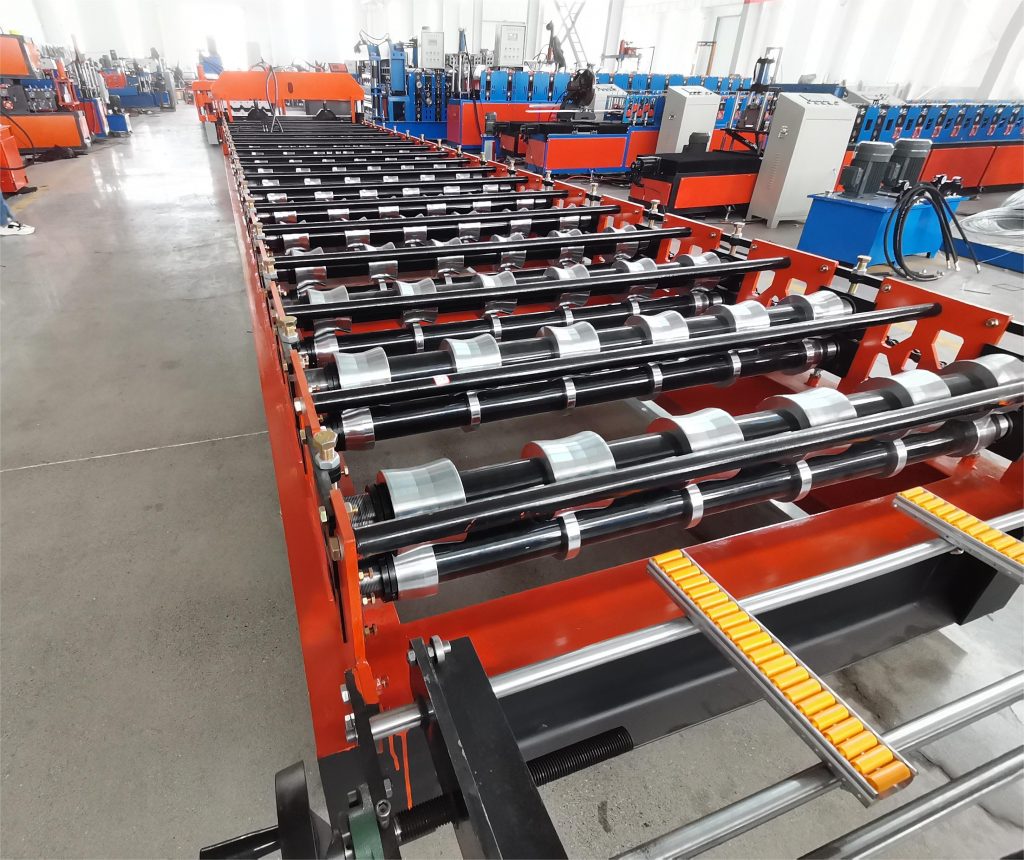
Key Technical Specifications at a Glance:Box Profile Roof Tile Machine
When comparing quotes from different equipment manufacturers, verify that the core drivetrain and structural components match your target raw materials:
- Total Motor Power: 5.5 – 7.5 kW (energy-efficient for continuous industrial operation)
- Working Line Speed: 16 – 18 m/min
- Applicable Material Thickness: 0.15 – 0.7 mm (Compatible with G300–G550 steel and color aluminum coils)
- Effective Coil Widths: 914 mm / 1200 mm / 1219 mm / 1450 mm
- Transmission & Cutting: Hydraulic motor drive with hydraulic cylinder front cutting
- Control Architecture: Fully automatic PLC + multi-language touchscreen HMI
Buyer’s Checklist: Customizing Your Machine for Local Market Standards
Roofing profile standards vary significantly across Africa, Southeast Asia, South America, and Eastern Europe. Before finalizing an order for a Box Profile Roof Tile Machine, confirm four customization details with your manufacturer:
- Profile Drawing Verification: Share your local market’s exact pitch, rib height, and effective cover width so engineers can design custom roller sets.
- Blade Material & Spare Parts: Request high-grade Cr12MoV quenched cutting blades matched to your thickest coil gauge to extend sharpening intervals.
- Frame Stability: Ensure the machine base uses heavy-duty welded H-beam steel to prevent vibration at full 18 m/min speed.
- Factory Testing Before Shipment: Always ask your supplier for a live test-run video using your specified coil thickness before approving final shipping.
Ready to Upgrade Your Roofing Sheet Production?
Choosing the right steel roofing sheet machine is a long-term capital investment that directly determines your product quality, scrap rate, and delivery capacity. Whether you are supplying industrial warehouses, commercial shopping malls, or residential housing developments, pairing robust mechanical engineering with automated PLC control ensures reliable returns for years to come.